Spending Hundreds of Millions on Marketing But No Customers? Is It the Message or the Landing Page?
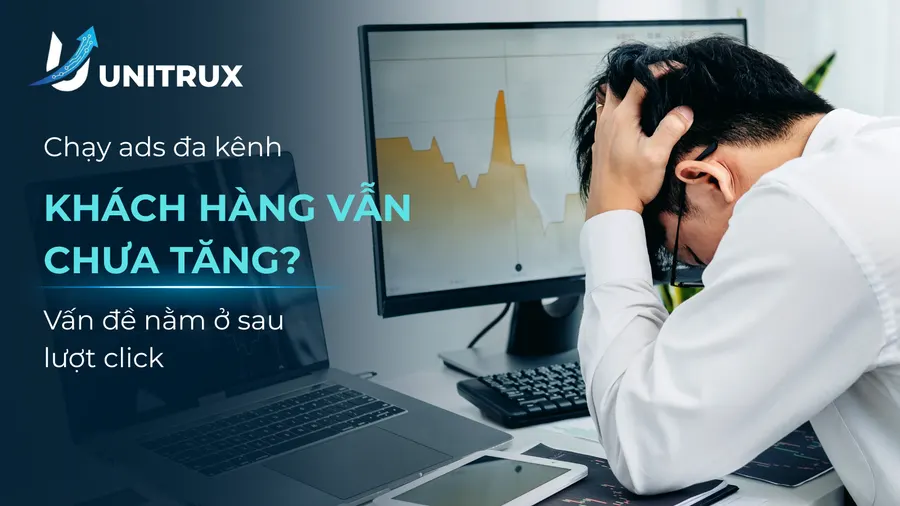
There's a question most Founders ask themselves after every month of running ads: "I've spent hundreds of millions - so where are the customers?" Traffic keeps flowing in steadily, engagement isn't low either, but orders stay flat, nowhere near matching the money spent.
The first reaction for many businesses in this situation is to blame the ad channel, the competition, or a "tough market." But few stop to ask the reverse question: "Could the problem actually be sitting inside my own marketing system?" - specifically, the message being delivered, or the landing page customers land on.
In reality, most cases of "spending money without getting customers" come down to two core factors: the service marketing message and landing page quality.
A vague brand positioning - where every problem starts
Many service businesses, especially agencies, fall into the trap of sounding just like everyone else with their "agency offer": the same talk of "comprehensive solutions," "professional team," "committed to results." When brand positioning isn't sharp enough, customers have no way to tell you apart from the dozens of other options competing in the same market.
This isn't just a gut feeling. According to Gartner research, 64% of B2B customers admit they can't tell one brand's digital experience apart from another's - a striking number that shows just how common it's become for service brands to blend into the crowd. Positioning expert April Dunford, author of the well-known book Obviously Awesome, also stresses that prospects need to immediately grasp what makes your business different, rather than being left to figure it out themselves.
Clear brand positioning doesn't just help a business stand out - it's also the foundation for building a consistent sales message across every channel, from ads to landing pages to the everyday content on your Fanpage or website.
Service marketing message - what decides whether a customer stays or leaves
The line between "chosen" and "scrolled past" is far thinner than in physical product industries. Customers can't hold your service, can't try it before deciding. All they have to go on is how you describe your value through words and images in your ads and landing page.
A weak service marketing message usually shares these common flaws:
- Talking about service features instead of the actual benefits the customer receives.
- Using generic language that could apply to any competitor in the industry, with no real differentiation.
- Failing to clearly define the ideal customer profile (ICP), turning the message into something meant for "everyone" but that truly reaches no one.
- An offer that lacks appeal, not clear enough for customers to immediately understand the value of taking action right now.
When these flaws exist, doubling or tripling the ad budget won't meaningfully improve conversions - because the problem isn't how many people see the ad, it's whether they're actually convinced.
Landing page - the deciding touchpoint before a customer leaves
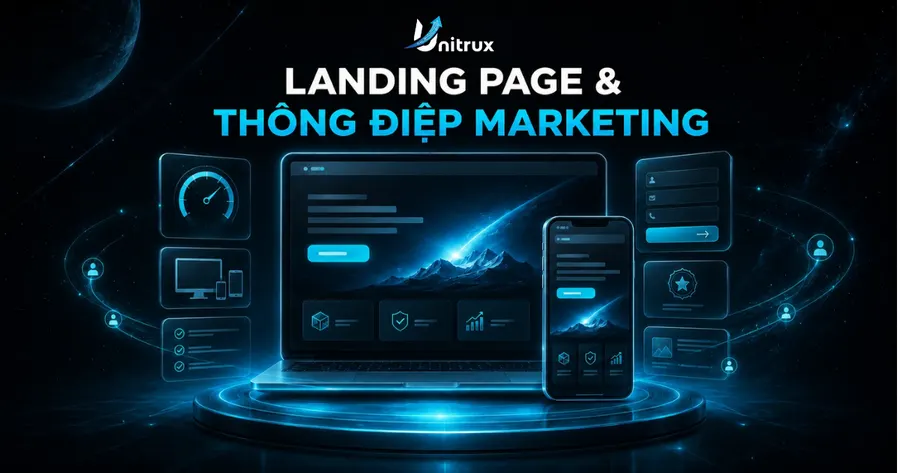
Even when the message is compelling enough to get a click, the journey isn't over yet. The landing page is where that initial interest either turns into a concrete action (leaving contact info, booking a consultation, making a purchase) or doesn't.
The numbers back this up. According to Unbounce's Conversion Benchmark Report - based on an analysis of over 41,000 landing pages and 464 million visits - the median conversion rate across all industries sits at around 6.6%. In other words, out of roughly every 15 visitors to a landing page, only 1 completes the intended action, while the rest slip away for one reason or another.
This is why landing page testing needs to happen regularly, not just once and then left untouched. Landing page testing covers several aspects:
- Page load speed: according to Portent's research (based on an analysis of over 100 million page views), a landing page that loads in 1 second converts 3x better than one that takes 5 seconds, and even a single extra second of delay can cut conversions by roughly 7%.
- Mobile experience: most traffic today comes from phones (roughly 65-83% according to several recent reports), yet mobile conversion rates tend to lag behind desktop, so the landing page needs to be thoroughly tested across different screen sizes.
- Placement and visibility of the call-to-action (CTA): a CTA buried in dense content is easy to miss.
- Length and complexity of the contact form: according to Unbounce data, forms with just 3 fields convert at around 10.1%, while forms with 9 fields drop to roughly 3.6% - showing that every extra field can quietly cost you potential customers.
- Clarity of the offer: customers need to understand within seconds exactly what they'll get if they leave their information.
Don't choose one - optimize both in parallel
Most businesses make the mistake of fixing only one of the two factors, then expecting a full turnaround in results. But the truth is, message and landing page are tightly linked - a strong message needs a landing page good enough to hold that attention, and a technically flawless landing page still needs a message compelling enough to turn a visit into a real customer.
The most effective approach is to build an ongoing landing page testing process alongside continuous refinement of your sales message, based on real customer behavior data - not on gut feeling or simply copying what competitors do.
It's time to take a full look at your marketing journey
If "spending hundreds of millions without gaining customers" sounds familiar to your business, don't be too quick to blame the market entirely.
Reach out to UNITRUX today! We'll work with you to review your entire brand positioning, ICP, and service marketing message, and run thorough landing page testing - so every dollar of your marketing budget actually turns into customers.
Data sources: Gartner, Unbounce Conversion Benchmark Report (Q4/2024), Portent Site Speed Research.
Đội ngũ Unitrux · Nội dung được biên tập theo tiêu chuẩn nội dung hữu ích và đáng tin cậy của Unitrux.