
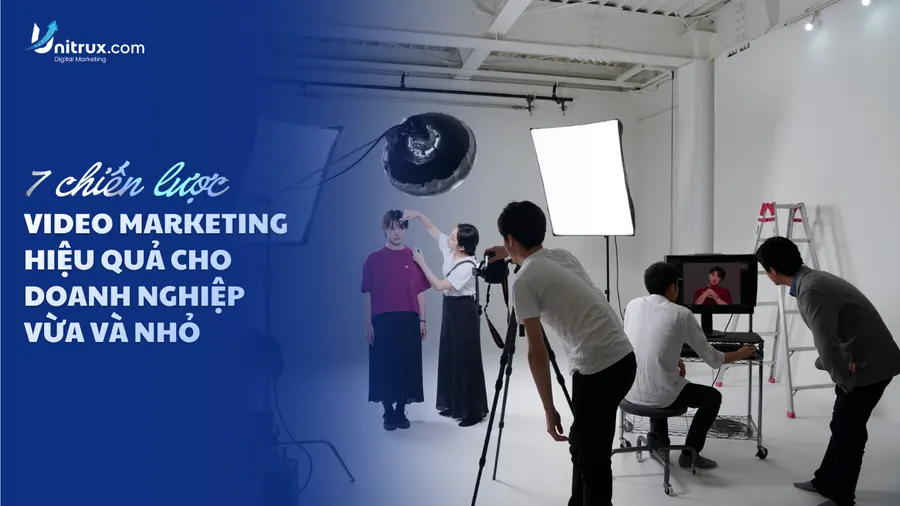
7 EFFECTIVE VIDEO MARKETING STRATEGIES FOR SMALL AND MEDIUM-SIZED BUSINESSES
Video marketing is becoming an important tool for businesses to attract customers, build brand image, and support sales across digital platforms. However, for a video to truly create value, businesses need more than just visually appealing content. They also need a video marketing strategy that aligns with their goals and target audience. So, where should businesses start, and how can video advertising do more than simply generate views and actually drive conversions?
What Is Video Marketing?
Video marketing is the use of video content as a tool to communicate brand messages, introduce products or services, build brand awareness, and support goals such as engagement, lead generation, and conversions. Notably, video is no longer limited to campaigns with large production budgets. Short-form formats, authentic-looking content, and the ability to repurpose one piece of content across multiple platforms allow businesses to implement video marketing more flexibly.
Businesses do not simply need to create more videos. They need a clear video marketing strategy so that each piece of content serves a specific purpose. Below are seven strategies that businesses can apply from ideation and production to distribution and performance measurement.
7 Video Marketing Strategies Businesses Can Apply
1. Prioritize Short-Form Videos to Capture Attention
If the goal is to reach new customers on social media, short-form video is a format worth prioritizing. TikTok, Instagram Reels, YouTube Shorts, and other social media platforms provide suitable environments for vertical, short, and mobile-friendly content.
A short video does not need to communicate too much information at once. Instead, businesses should focus on one problem, one benefit, or one memorable moment. The first three seconds can be used to ask a question, present a familiar situation, or immediately show viewers a result they care about.
Hook: Start with a problem, question, image, or compelling result.
Value: Provide clear information, a useful tip, or a specific benefit.
CTA: Guide viewers toward the next action, such as watching more content, sending a message, visiting the website, or learning more about the product.
Important factors in creating effective videos include promoting the video properly, capturing attention within the first few seconds, and keeping the content concise.
2. Build Videos Around Stories Instead of Simply Introducing Products
A video that only lists product features can easily feel like a direct advertisement. To increase memorability, businesses can shift the focus from “What does the product have?” to “What problem does the product solve for customers?”This is how storytelling can become an important part of a video marketing strategy.
For example, instead of creating a video that simply introduces a coffee machine, a brand could tell the story of a busy morning when a user has only a few minutes to prepare before going to work. The product then appears naturally as a solution to that situation.
For small and medium-sized businesses, storytelling does not require complicated settings or expensive production. Customer stories, behind-the-scenes content, the product creation process, or a day in the life of an employee can all become valuable material for videos.
3. Combine Video Advertising With Valuable Content
Video advertising plays an important role in introducing products and encouraging action. However, if all of a brand's content is focused on selling, viewers may quickly feel overwhelmed by constant advertising. Therefore, businesses should create a balanced content system that combines promotional content with valuable information.
One simple approach is to divide content into different categories: educational videos, entertaining or relatable videos, product introduction videos, and real-life experience or demonstration videos. Among these, video advertising can focus on product benefits, promotions, or calls to action, while valuable content helps build trust before customers make a purchasing decision.
4. Adapt Videos to Each Platform
A common mistake is creating one video and posting the exact same version across every platform. Although repurposing content helps save resources, businesses should still adjust the editing style, aspect ratio, length, title, and call to action according to each channel.
For example, TikTok and Instagram Reels can prioritize vertical videos, fast pacing, and content that captures attention immediately. YouTube is more suitable for longer-form content, tutorials, or in-depth topics. Facebook can combine short videos with explanatory content, community engagement, and sales activities. For B2B businesses, professional content, case studies, and educational videos may be suitable for LinkedIn and YouTube.
This shows that a video marketing strategy should be determined based on the target audience and business objectives rather than simply following a single platform.
5. Leverage Customer-Generated and People-Centered Content
Content featuring customers, employees, or content creators can make videos feel more relatable and authentic. Businesses can leverage customer reviews, product experience videos, customer stories, behind-the-scenes content, or videos created by employees.
An important consideration is that businesses should obtain permission from anyone featured in the content and use the content for its intended purpose. Instead of trying to make every video look like a perfectly polished advertisement, businesses can retain natural details that help viewers imagine the product in real-life situations.
6. Repurpose One Video Into Multiple Pieces of Content
For small and medium-sized businesses, time and budget constraints can make it difficult to produce a completely new video for every platform. A more efficient strategy is to create content based on the model of “one original piece of content, multiple versions.”
For example, from 5 to 10 minute expert interviews, a business can create several short videos, turn a key quote into a Threads post, transform the main ideas into an Instagram carousel, write an in-depth website article, and use a highlight from the interview as a video advertisement.
7. Measure Video Performance Based on Business Goals, Not Just Views
A video with a large number of views does not necessarily mean that it has achieved its marketing objective. Businesses should determine their KPIs before production to understand whether the video is intended to build awareness, drive engagement, generate leads, or increase conversions.
If the goal is awareness, businesses can track reach, views, and view-through rates. If the goal is engagement, they should pay attention to comments, shares, saves, and watch time. If the goal is conversion, they should track clicks, messages, registrations, orders, or revenue associated with the campaign.
Therefore, measurement helps businesses identify which formats are worth continuing to invest in and which types of content need to be adjusted.
How to Build a Video Marketing Strategy for Your Business
Instead of starting with the question, “What video should we post today?”, businesses should start with their objectives and target audience. A simple process can include six steps:
Define your objectives: Do you want to increase brand awareness, engagement, leads, or sales?
Identify your target audience: What problems are your customers facing? Where do they usually consume content, and what type of communication do they prefer?
Choose your content pillars: Educational content, entertainment, product content, behind-the-scenes, testimonials, case studies, or brand stories.
Choose the right formats: Short-form videos, tutorials, interviews, reviews, video advertising, livestreams, or long-form videos.
Plan distribution: Determine your platforms, posting frequency, publishing times, and advertising budget if applicable.
Measure and optimize: Compare KPIs across videos, test different hooks and CTAs, and repurpose high-performing content.
Ready to Put Your Brand on Screen?
Don't let your videos stop at simply generating views. Build a video marketing strategy with clear objectives, engaging content, and an effective distribution plan.
Contact Unitrux today for consultation and a video solution tailored to your business needs.
Hotline: 0938695186
Đội ngũ Unitrux · Nội dung được biên tập theo tiêu chuẩn nội dung hữu ích và đáng tin cậy của Unitrux.